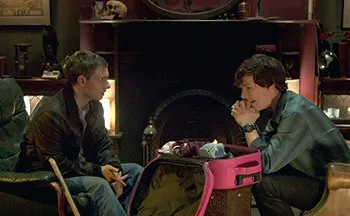
What makes is relevant here for Muddy Colors, and anyone interested in storytelling, is that we have two completed versions of this exact episode, both the final aired version amd the unaired “pilot” version that preceded it. What makes this such a rare treasure is that both were shot from identical scripts, but each by different directors and with some essential different narrative approaches that make comparing them an incredibly essential case study for how to tell a good story and then how to do it better. And the aired pilot is certainly better by miles. Being able to witness the first draft and then the changes that make the final is an absolutely priceless lesson in how one attacks and makes better a story. Whether you write or draw or paint, you are making the same kinds of choices any narrative person would by rote. Blocking out how and where we see a thing, how we portray it, stylize it, present it and from what perspective are all aspects we must consider if we’re to make successful stories or art- and always both.
We realised the other day that it was a bit of an anniversary of sorts (not since we go together officially but the first time we, you know…) so we thought we’d celebrate by going back to where it all began, really.
It’s not just Style that shows itself as a value when comparing them both, but how flash and effect can be brought into a narrative as a tool for driving it and communicating point of view. We see what Sherlock sees in words across the objects he observes in the new one akin to his love of texting. We feel the almost insect like rapid fire thought process from within his character whereas in the first version, it’s all observational from the outside. The former may be more natural, but as Sherlock is a fairly prickly if not disagreeable person, seeing him only from without undermines the essential need to empathize with him that getting a brief visual cue to walk in his shoes here and there delivers. There are moments of significant change to the dialogue- especially in the scene above where Watson’s presence is justified by Inspector Lastrade’s refusal to be Sherlock’s note-taker- Watson steps in and his purpose is set. In the new version Sherlock encourages Watson to go further and examine the body after heartily defending his presence for reasons we don’t know. We know Sherlock needs him there, but he won’t say why. Watson then proves his purpose and underscores value in the room and reenforces this for his whole larger purpose in two swift exchanges. Above the first scene the woman is an object observed from a distance, in the latter it’s a person they come to. We see her from her vantage and humanize her where the other objectifies her. Simple stuff of choosing where to put the camera like this can mean the world in terms of narrative meaning.
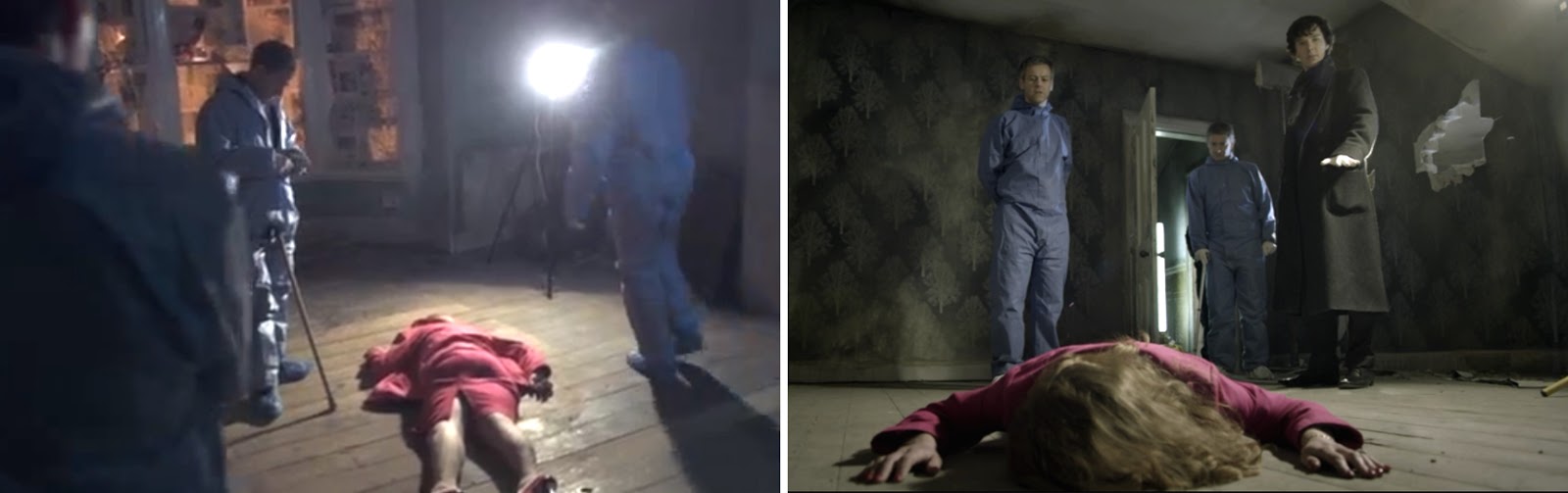
Here above we see the two new partners discussing how Sherlock managed to derive so much supposedly private information from a mere glance. In the first we see them in a car with a clumsy greenscreen of the city through the rear window behind them as Sherlock ticks off the clues. The dialogue remains identical but in the latter, we’re constantly in and out of the car at key moments. When out, Watson is looking outward as if realizing he’s trapped in a bottle with a scary stranger he also admires. he doesn’t look at us pleading for escape, and so we are left to leave him where he clearly wishes to be. We get a sense of place and motion, of context rather than mere background. And all of it delivered by simple visual choices without changing a word of script. The latter showcases every image as a considered choice. The former leans more on typical and lazy conventions delivering words but not fortifying in meaning. The former is like 1980’s tv still shrugging under its 60 year old vaudevillian heritage, the latter is comics done exceptionally well. The changes aren’t just the fashion of how they’re shot, they are while watching it unfold night and day different despite the near identical script. It is a case study in choices and corrections that mirror most editorial processes, and reaches well beyond what one editor might do in the bay, and what another could bring. Each change is wholly a storytelling change. Often one that combines or adds narrative purposes to a given scene. Wherein the former may simply show our two characters in a setting as below, the second does it but adds the narrative element of the window to also show us what SHerlock is really there to witness easily and in a way that allows Watson to participate.